GG The Franchise Guide - Home
Franchising Blog

Franchise Self-Assessment: Are You Ready for Ownership?

Franchise Self-Assessment: Are You Ready for Ownership?

Aspiring entrepreneurs can use a comprehensive franchise self-assessment to determine their readiness for business ownership, thoroughly evaluating their personal finances, necessary skills, and desired lifestyle. The guide details critical steps, including securing various franchise funding options like SBA loans and 401(k) rollovers, and emphasizes the importance of reviewing the Franchise Disclosure Document (FDD) and understanding working capital requirements. This process helps translate savings and leadership experience into a viable franchise plan. GG the Franchise Guide offers complimentary, personalized assistance and a matching process, with one-on-one guidance from Giuseppe Grammatico, to align assessment results with realistic franchise options.

How Can You Assess Your Financial Readiness for Franchise Ownership?

How Can You Assess Your Financial Readiness for Franchise Ownership?

Financial readiness for business ownership involves clearly budgeting for upfront costs, planning for working capital, and establishing a suitable franchise funding pathway. This assessment helps identify typical cost line items and compares common financing routes—including cash, loans, or franchisor options—to help you choose the right mix. By listing available liquid capital, credit posture, and acceptable payback timeline, you can establish a baseline for viable franchise tiers, which helps reduce risk and prioritize options, such as personal training franchise opportunities

This checklist lists common upfront cost categories to capture in your budget:

  1. Initial franchise fee: the franchisor’s entry charge for rights and training.
  2. Build-out and equipment: costs to prepare or equip a location or vehicle.
  3. Working capital: operating cash to cover payroll, inventory, and marketing before break-even.

Monitor these line items closely to avoid undercapitalization and to validate franchise disclosure claims.

H3: What Initial Costs and Financing Options Should You Consider?

Initial costs typically include the franchise fee, lease or build-out, equipment, initial inventory, and working capital for 3–6 months. Eligibility and timelines differ: SBA loans require documentation and a reasonable credit history, 401(k) rollovers (ROBS) let you fund without loan interest but need careful setup, and franchisor financing can bridge gaps with variable terms. Consider pros and cons: SBA offers lower rates and longer terms, ROBS avoids debt but involves plan complexity, and franchisor deals may have higher rates but faster access. Comparing these options against your liquidity and timeline clarifies which route fits.

Intro to financing options and comparison table:

Financing OptionTypical TimelinePrimary Trade-off
SBA loan30–90 daysLower rates, more documentation
401(k) rollover (ROBS)2–6 weeks setupNo loan interest, requires compliance
Personal cashImmediatePreserves simplicity, reduces leverage

H3: How Do You Calculate Expected Return on Investment?

ROI for a franchise is a function of initial investment, annual net profit, and payback period; estimate conservatively to plan for variability. Basic formula: ROI (%) = (Annual Net Profit / Total Cash Invested) × 100. For payback: Payback (years) = Total Cash Invested / Annual Net Profit. Use franchisor-provided sales ranges as inputs but stress-test with lower revenue and higher royalty scenarios. Sensitivity analysis—varying revenue by ±20% and royalty rates—reveals how fragile or robust payback assumptions are.

ROI components table for quick mental math:

ComponentDescriptionTypical Range/Note
Initial investmentFranchise fee + build-out + equipmentVaries widely by concept
Ongoing costsRoyalties, marketing fund, rent, payroll% of revenue or fixed costs
Expected revenueSales forecast based on comparable unitsUse conservative percentile
Payback periodYears to recover cash investmentShorter is lower risk

Run numbers conservatively and consult advisors for personalized projections.

What Personality Traits and Skills Make a Successful Franchisee?

Personality fit determines how well you can follow systems, lead teams, and execute local sales and operations consistently. Successful franchisees typically combine leadership, discipline, coachability, and customer focus; these traits let you implement franchisor systems while optimizing for local markets. Assess yourself with short self-check prompts to identify strengths and gaps and prioritize training or partnerships where needed. This behavioral readiness reduces friction with franchisors and improves unit performance once open.

Identify the core traits with brief descriptions:

  1. Coachability: willingness to learn and follow proven systems improves operational consistency.
  2. Discipline: reliable execution of routines and standards ensures predictable customer experience.
  3. Customer focus: prioritizing service and local marketing drives repeat business and referrals.

If gaps appear, consider management training, hiring a strong GM, or co-owner models to shore up weaknesses.

H3: Which Leadership and Communication Skills Are Essential?

Leadership in franchising centers on hiring, training, and ongoing staff management to maintain consistent customer outcomes. Strong communicators set clear expectations, deliver feedback, and represent the brand in local partnerships and marketing. Practical tips include scripting core onboarding conversations, scheduling regular team check-ins, and documenting standard operating procedures for continuity. Improving these skills rapidly often involves short courses, peer mentorship, and structured delegation until systems run smoothly.

Develop these habits to reduce owner time burden and improve team performance.

H3: How Does Your Problem-Solving and System Adherence Impact Success?

Leadership in franchising focuses on hiring, training, and continuous staff management to ensure consistent customer outcomes. Strong communicators are essential for setting expectations, providing feedback, and representing the brand in local marketing. Practical tips include scripting onboarding conversations, scheduling regular team check-ins, and documenting standard operating procedures (SOPs) for continuity. Rapidly improving these skills—crucial for reducing owner time burden and enhancing team performance—often involves short courses and structured delegation. Effective delegation is key to managing the business while balancing responsibilities like securing franchise funding or overseeing operations, even in specific models like a home personal training franchise.

How Do You Align Your Lifestyle and Goals with Franchise Ownership?

Family enjoying a picnic, representing lifestyle alignment with franchise ownership

Lifestyle alignment evaluates if business ownership supports your personal priorities for time, family, and long-term finances while matching your risk tolerance. You must compare models like owner-operator (high direct involvement) versus semi-passive or multi-unit (less daily involvement) to determine your desired level of commitment. Mapping clear financial targets, desired exit timelines, and acceptable weekly time commitments clarifies which franchise types best suit your current life stage. This clear lifestyle map helps you choose a franchise that successfully balances income generation with quality-of-life objectives, a decision that is also closely linked to your strategy for obtaining franchise funding.

Use this checklist to translate lifestyle priorities into franchise model choices:

  • Identify desired weekly owner hours and acceptable variability.
  • Define family and personal commitments that must be protected.
  • Set financial goals: income replacement, savings growth, or eventual sale timing.

Summarize trade-offs and choose models that meet both personal and financial priorities.

H3: What Time Commitments and Lifestyle Changes Should You Expect?

Time commitments in business ownership vary significantly based on the franchise model and phase. Opening a first unit often demands full-time presence, requiring 40+ hour weeks at peak for several months. Steady-state owner-operators typically work 40–60 hours weekly, depending on staffing levels. Semi-absentee models offer reduced owner hours but necessitate hiring competent managers and accepting lower hands-on control. It’s crucial to plan for busy launch months, slower growth seasons, and periodic oversight as standard. Protecting family time primarily involves effective delegation, meticulous scheduling, and securing a strong on-site manager. Planning realistic timelines and maintaining open family communication are essential for setting expectations early, a process that runs parallel to securing necessary franchise funding.

H3: How Can Franchise Ownership Support Your Long-Term Financial and Personal Goals?

Franchise ownership offers pathways for income generation, building equity, and securing future exit options through either single-unit growth or multi-unit expansion. Conservative planning suggests stabilizing cash flow over several years before attempting to scale. While multi-unit growth can accelerate wealth creation, it inherently increases management complexity. Long-term planning should incorporate potential exit strategies, such as selling an established territory or a franchised portfolio. To ensure ownership successfully advances your overall life plan, the franchise choice must align with both your income targets and lifestyle desires. Utilizing conservative financial projections and pursuing incremental expansion are key strategies for mitigating risk and preserving optionality regarding franchise funding.

How Do You Evaluate Franchise Systems and Support Before Ownership?

Evaluating franchisor systems is a due-diligence process that focuses on training, ongoing operational support, marketing assistance, and technology platforms that enable consistent execution. Look for clear training schedules, accessible field support, robust local marketing programs, and modern tech for POS and operations. Red flags include vague training descriptions, limited field presence, and unclear marketing fund usage. A structured evaluation ensures you pick a franchisor whose support model matches your experience and market needs.

Here is a practical checklist to evaluate franchisor support and identify red flags:

  1. Training clarity: defined curriculum, duration, and hands-on components.
  2. Ongoing support: availability of field reps, help desks, and operational audits.
  3. Marketing and tech: centralized campaigns, local funds, and modern operational tools.

Use this checklist to compare franchises side-by-side before committing.

H3: What Training and Ongoing Support Should You Expect from Franchisors?

New owners should anticipate initial classroom and field training covering core aspects like operations, hiring, inventory, and marketing, which typically lasts from one week to several weeks depending on the business’s complexity. Ongoing support from the franchisor is crucial and should include scheduled field visits, up-to-date operational manuals, centralized marketing programs, and a clear escalation process for solving operational issues. Prospective owners should ask franchisors for specific metrics on support response times and concrete examples of how they’ve helped new owners navigate startup challenges. Effective franchisors provide both structured onboarding and continuous performance coaching, alongside guidance on critical areas like managing franchise funding.

Confirm support commitments in writing and evaluate references for real-world follow-through.

Intro to support comparison table:

Support ElementWhat to ExpectRed Flag
Initial trainingStructured classroom + fieldVague timeline or content
Field supportRegular visits and auditsRare or reactive support
Marketing supportCentral campaigns + local guidanceNo transparency on fund use

H3: How Do You Review Franchise Disclosure Documents and Legal Considerations?

When reviewing a Franchise Disclosure Document (FDD), prioritize sections detailing unit economics, fees, territory rules, and litigation history. Specifically, analyze Item 7 (initial fees & investment), Item 19 (financial performance representations), and Item 17 (renewal/transfer terms). Ensure clarity on royalties, advertising contributions, and territory exclusivity. Consult franchise counsel for ambiguous clauses, reciprocal obligations, or unusual mandatory purchases. Be wary of red flags such as inconsistent earnings claims, high mandatory vendor costs, or severe limitations on resale options.

Use a checklist to mark sections needing legal review and document questions for counsel and the franchisor.

Book a time to speak with GG the Franchise Guide.

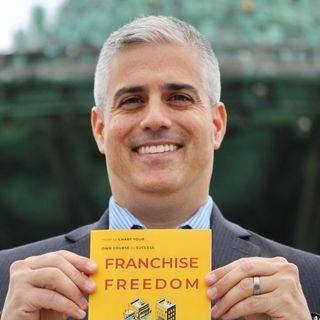
Giuseppe Grammatico

Giuseppe Grammatico

Franchise Consultant, Author, Speaker & Creator

Giuseppe Grammatico is a franchise veteran, coach, author, speaker & consultant who simplifies the process of business ownership through franchising and assists in guiding his candidates to the best franchise match.